


 Dedicated Server
 VPS Hosting
 Email Hosting
 Web Hosting


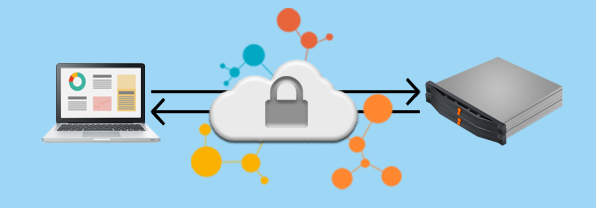
The private cloud, which is also popularly called an enterprise cloud or an internal cloud, resides within a hosted datacenter and the data is protected by a firewall. It is the best solution for businesses which own state-of-the-art datacenters and handle sensitive data. But it also means that these businesses will be solely responsible for managing, maintaining and also updating their datacenters. In a public cloud solution on the other hand, the client enterprise will not be accountable for management. Data gets stored inside the provider’s datacenter; so, the provider remains responsible for its maintenance and management.
How To Choose The Right Cloud Hosting Solution For Disaster Recovery?
In spite of misgivings amongst clients about data security in the cloud and vendor lock-in issues, more and more companies are adopting cloud hosting solutions for the agility and continuity they offer. At the same time, being able to select the right cloud hosting for your business is a tricky affair. This is especially more difficult if you are to consider the data recovery process. You will find that both the private and public clouds offer many advantages which can cater to many client concerns. But to know which solutions work best for you, it is necessary to match your DR needs with the solutions that you are getting.
What Are RTO And RPO?
The topmost objective for any IT manager is to make sure the system comes online at the earliest after a downtime period that could have been triggered for some reason. So the RPO or Recovery Point Objective and the RTO or the Recovery Time Objective is significant as they will define business expectations. These metrics will tell you at what point the infrastructure should ideally recover when a downtime has occurred. When you have a well-planned IT strategy, you can ensure that this is recovery time stays within the RTO and RPO limits. But, when the time exceeds these limits, you can expect to lose customer goodwill and revenues.
The RTO and RPO metrics will however differ according to the kind of business you are running. When the downtime translates into severe revenue losses the RTO and RPO is likely to be less. So, the less the time, the more expensive is the disaster recovery process. Besides this, IT managers also have to ensure that data is restored into the system. For this, they may have to go through a tedious process where the data must be re-loaded and security patches must also be installed.
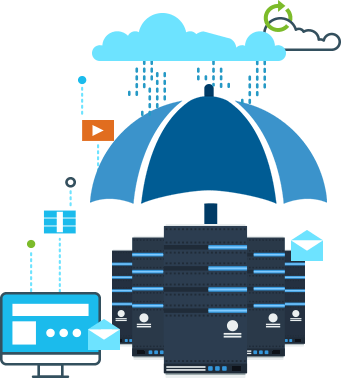
A mirror store is found to be the easiest and most effective way to do this. This means that there is a storage facility at any off-site location which contains all data backups. This can be used for data re-loading when required. Apart from this, another reliable and budget-friendly solution is using the private cloud. The private cloud has ring fencing and caters to a single client. It is in contrast to the public cloud which caters to multiple users. So, the private nature of this cloud model ensures that there is enhanced security.
When you have a portal, you need protection from unauthorized access and DDoS attacks. You do not require an on-site datacenter; you also want the data to be recoverable at the soonest. As this environment is not likely to hold very sensitive data, it is acceptable when resources have to be shared with others having similar requirements. In such a situation, a public cloud environment is what will work for you best. But, if you are dealing with highly sensitive information like medical records and legal documents, there are chances of data leaks, non-compliance penalties and unauthorized access.
You must make sure that all data is protected not only in transit but also at rest. This becomes possible only with a private cloud hosting package. It will offer advanced firewalls, multi-factor authentication and intrusion detection and prevention measures. So, all these dedicated resources will ensure robust security for the data. At times, data protection may require you to delete or destroy some outdated data. This becomes possible only within a private cloud environment. As this set-up is separate from other clients, it is possible to destroy the environment at any point of time. This advantage is not there when there are many companies sharing the same infrastructure.
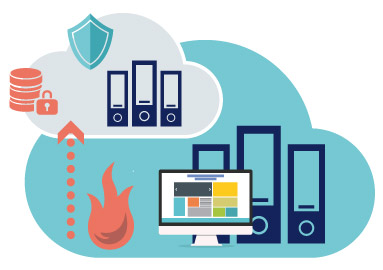
The basic difference between private and public clouds in terms of DR is that of shared resources. In both these clouds, it is possible to recover data to shared resources. But in a private cloud, most resources are separate and you can isolate these onto a distinct infrastructure. The more resources are shared, the more economical are the disaster recovery solutions. But the more public the recovery cloud is, the higher are the security threats in the first place. So, in the end, it appears that a hybrid cloud is best suited for DR. Like the private cloud, it will offer multi-factor authentication and prevent intrusions and will also allow the cloud to restore both virtual and physical environments.
Interesting Topics To Read:-
What are the benefits of hosting on Cloud ?


