


 Dedicated Server
 VPS Hosting
 Email Hosting
 Web Hosting


Were you searching for "GPU Cloud Computing: Powering AI and High-Performance Workloads"?
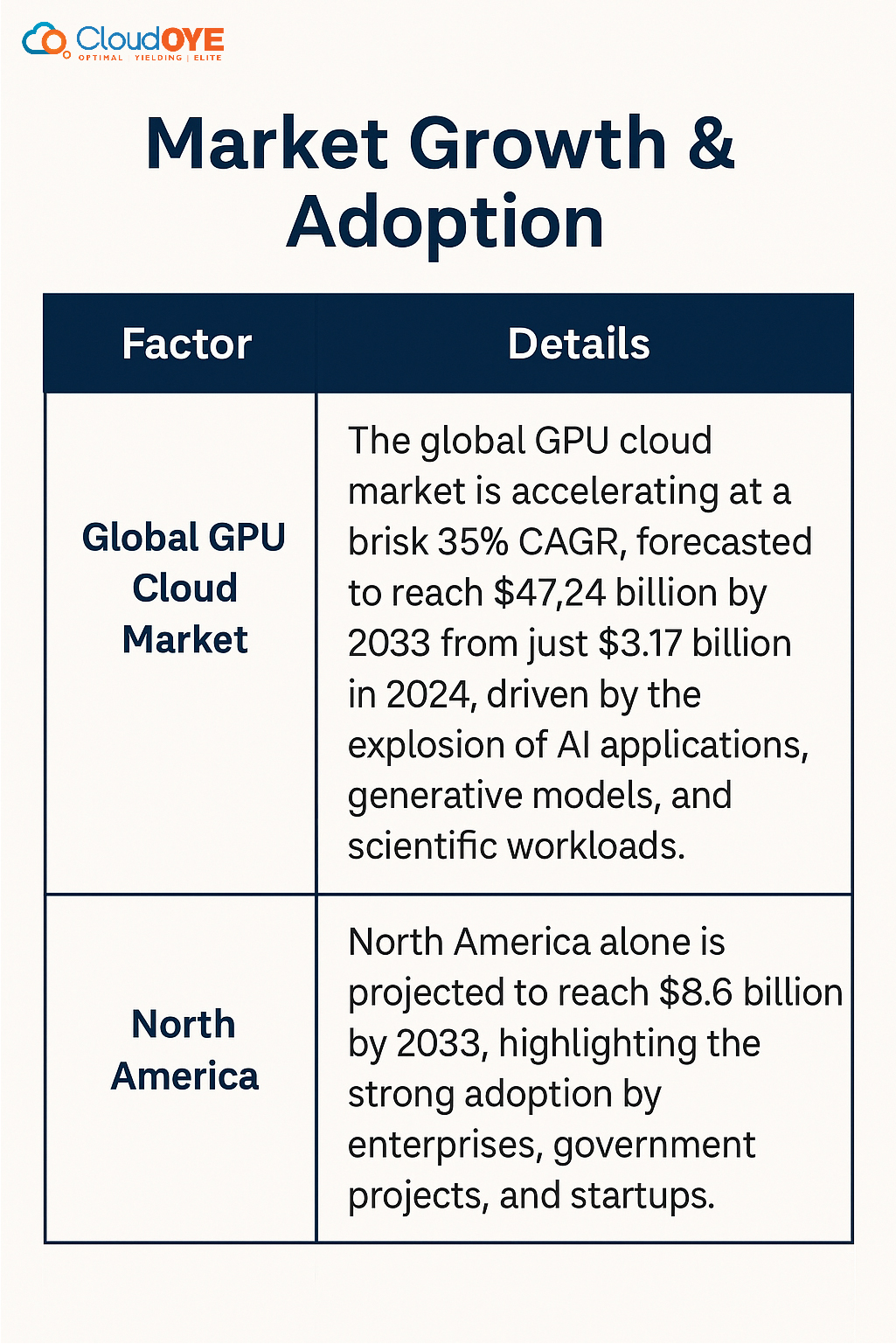
GPU cloud computing delivers scalable, parallel processing power, enabling data-intensive applications like AI model training, deep learning inference, scientific simulations, and real-time analytics to run up to 20 times faster than CPU-based infrastructure. With projected market growth above 35% year-on-year and massive cost advantages, GPU cloud platforms are defining the future of high-performance computing in 2026.

What is GPU Cloud Computing?
GPU cloud computing leverages virtualized Graphics Processing Units (GPUs) in the cloud, delivering massive parallel processing power for workloads previously constrained by local, physical hardware. Unlike traditional CPU-based servers that sequentially process data, GPU-enabled cloud instances execute thousands of concurrent operations, rapidly accelerating machine learning, deep learning, data science, graphics rendering, and more. The result? Faster project delivery, greater accuracy, and scalable solutions for modern enterprise and research environments.
Table of Contents
-
Introduction
-
GPU Cloud Computing Explained
-
Latest Industry Statistics & Market Trends (2026)
-
GPU Cloud for AI & High-Performance Workloads
-
Why Choose CloudOYE for GPU Cloud?
-
Real-World Performance Benchmarks
-
FAQs
GPU Cloud Computing: The 2026 Landscape
Real Performance Gains
-
Modern GPU cloud servers deliver bandwidths up to 1,555 GB/s, compared to CPUs that max out around 50 GB/s.
-
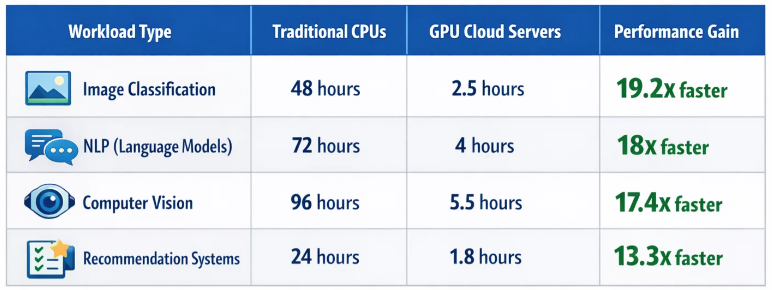
Typical high-performance workloads see dramatic speed-ups:
-
Image Classification: 19.2x faster (from 48 hours to 2.5 hours)
-
Natural Language Processing: 18x faster (from 72 hours to 4 hours)
-
Computer Vision: 17.4x faster (from 96 hours to 5.5 hours)
-
Recommendation Systems: 13.3x faster (from 24 hours to 1.8 hours)
-
How GPU Cloud Powers AI & High-Performance Computing
Actionable Benefits for Users
-
AI/ML Training & Inference: New LLMs, diffusion models, and generative AI require massive compute; GPU cloud enables rapid prototyping and deployment for enterprises, researchers, and educators.
-
Scientific & Engineering Simulations: Real-time data analysis, predictive modeling, and simulations are now accessible for small labs and large corporations alike.
-
Cost Efficiency: Over 3 years, GPU cloud platforms save up to 60–70% versus local hardware ownership by eliminating upfront investment, maintenance, and energy costs.
-
Sustainability: Growing adoption of liquid cooling and renewable-powered data centers is enhancing green cloud computing, making GPU cloud not just efficient—but sustainable.
Why Tech Leaders and Developers Choose CloudOYE
-
Instant Scalability: Rapidly deploy GPU instances on-demand, scaling up for big training runs or scaling down after project completion.
-
Tier 3 Data Centers: Robust performance, redundant architectures, and round-the-clock dedicated support ensure zero downtime and maximum reliability.
-
Pay-as-You-Go: Only pay for what you use—ideal for students, researchers, and budget-conscious enterprises.
CloudOYE Positive Data Points:
-
"CloudOYE server performance is rock solid, no downtime at all." —User review on Trustpilot
-
Distinctive features include instant scalability and state-of-the-art cloud infrastructure, making CloudOYE a preferred choice across industries.
Benchmarks & Real-World Examples
Transform Your Experience with GPU Cloud Power
Dramatically boost your productivity, research breakthroughs, and enterprise growth by leveraging CloudOYE’s leading GPU cloud computing platform. The future belongs to those who harness the speed and scale of modern cloud technology—why wait?
FAQs
Q1: What is GPU cloud computing and why is it vital in 2026?
GPU cloud delivers parallel processing power required by modern AI, scientific, and data-driven workloads, enabling substantially faster performance and cost efficiency versus CPU-only cloud infrastructure.
Q2: How do GPU cloud servers compare to local GPU hardware for deep learning?
GPU cloud servers save up to 70% over 3 years with pay-as-you-use billing while matching or outperforming local hardware on parallel workloads due to instant scalability.
Q3: Can GPU cloud be used for student research projects?
Absolutely. CloudOYE’s flexible billing and scalable access are suitable for students and researchers working on language models, data analytics, or scientific simulations.
Q4: What industries benefit most from GPU cloud in 2026?
Healthcare (diagnostics, imaging), finance (risk modeling), automotive (simulation, autonomous vehicles), and scientific research lead adoption.
Q5: Are GPU cloud servers sustainable?
Yes, modern providers utilize liquid cooling and renewable-powered data centers to dramatically reduce energy usage and environmental impact.
Q6: Which GPU brands are most popular on the cloud?
NVIDIA (A100, H100, Blackwell), AMD MI300, and Intel deliver leading performance; many providers offer choice per workload.
Q7: How can enterprises optimize costs for AI workloads in the cloud?
Kubernetes GPU autoscaling and dynamic resource allocation can lower GPU expenses by 20–35% in production environments.
Q8: Is CloudOYE suitable for mission-critical workloads?
Yes—Tier 3 data centers, robust security, and dedicated support make CloudOYE a top choice for enterprise hosting.
Q9: What are the top trends shaping GPU cloud computing in 2026?
Federated learning, sustainability, edge-cloud integration, and quantum acceleration are pushing boundaries in distributed computing.


