


 Dedicated Server
 VPS Hosting
 Email Hosting
 Web Hosting


Were you searching for, “What drives colocation pricing for businesses in 2026?”
Colocation pricing is defined by the blend of physical space, power, connectivity, security, and operational overhead—making it vital for every modern business to understand how these factors are measured, compared, and billed. In 2026, surging AI workloads, energy costs, and security requirements are fueling new dynamics in India’s colocation market, especially as data center standards like MeitY empanelment set a new reliability benchmark.
Let’s decode what truly influences colocation charges—and how smart choices can drive savings without performance tradeoffs.

Table of Contents
- What is Colocation Pricing?
- Key Factors Influencing Colocation Costs
- Latest Colocation Pricing Trends in 2026
- Advantages of MeitY-Empanelled Data Centers in India
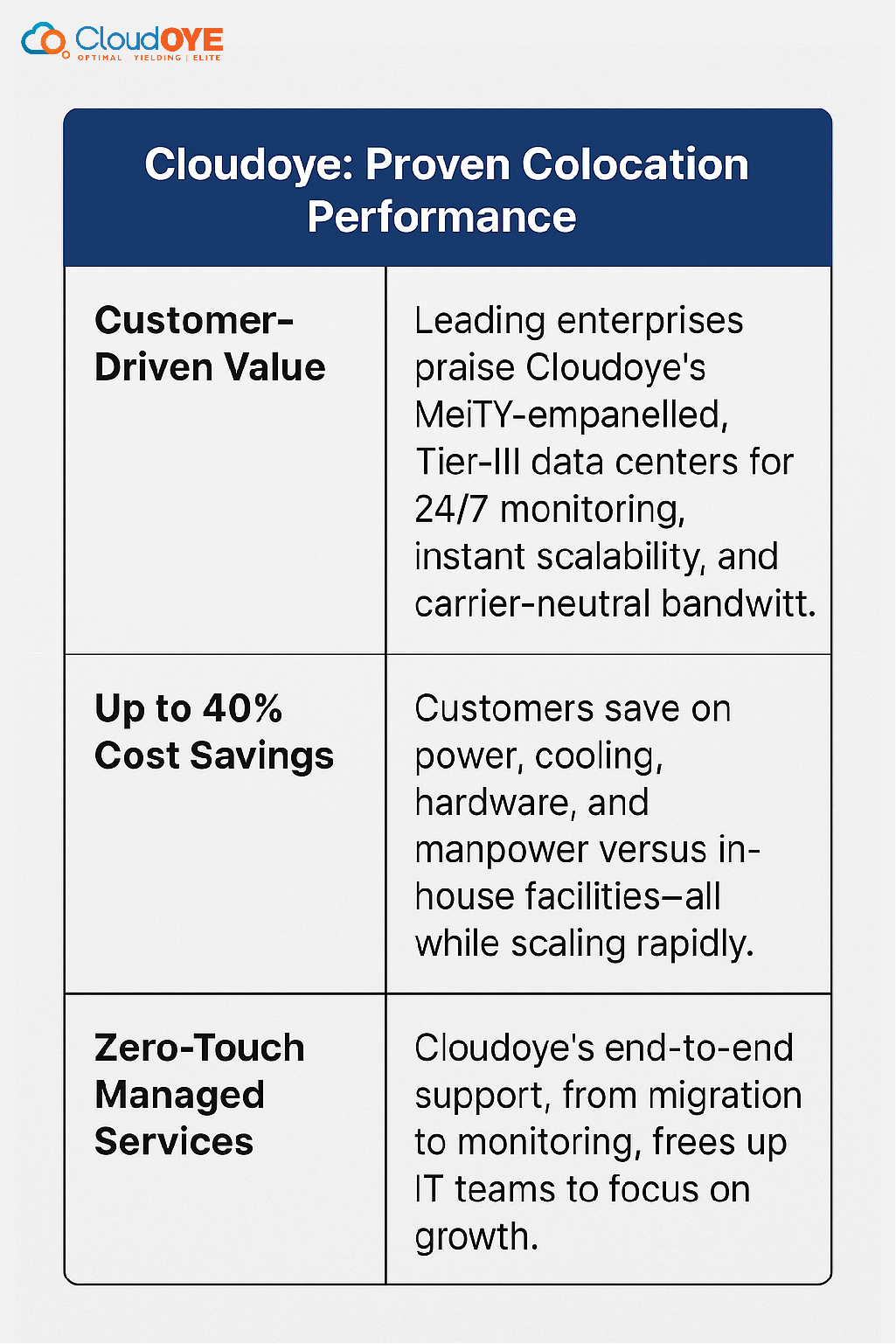
- Cloudoye: Cost, Value & Customer Stories
- Level-Up with Smart Colocation (Conclusion)
- Frequently Asked Questions (FAQs)
What is Colocation Pricing?
Colocation pricing refers to the recurring fees a business pays to host its servers and IT equipment inside a professional third-party data center, which provides rack space, continuous power, cooling, and redundant networking in a secure, managed environment.
Key Factors Influencing Colocation Costs
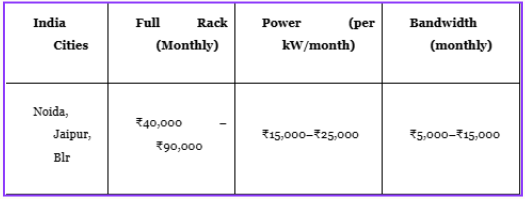
- Power & Cooling Demands: High-density racks, especially for AI/ML deployments, demand significantly more energy and advanced cooling, directly raising colocation rates. In India, power adds ₹15,000–₹25,000 per kW/month to bills.
- Rack Space: Pricing varies by full/half racks. In 2026, Indian market rates start from ₹40,000/month for full racks, depending on city and tier.
- Connectivity: Expect additional ₹5,000–₹15,000/month for robust bandwidth and low-latency providers.
- Location & Facility Certification: Proximity to business hubs, disaster resilience, and compliance with certification (like MeitY empanelment) all impact costs.
- Security & Uptime: Multi-layered security, zero-downtime SLAs (99.99%+), and automated monitoring are increasingly non-negotiable—adding tangible value.
Latest Colocation Pricing Trends in 2026
- India’s Market Value: Expected to surpass $8B by 2026, with a CAGR of over 25% through 2030, powered by digitization and cloud demand surges.
2026 India server Price Ranges:
- US, EU, Singapore:
- US: $200–$500/kW/month; Europe: €250–€600/kW/month.
- APAC (Singapore): SGD 1,500–SGD 2,500/month/rack.
- Growth Drivers: Rapid AI adoption, edge computing, government mandates, and enterprise digitization.
- Global Trends: Vacancy in “hot” markets (like Silicon Valley) sits at record lows, with US price hikes up to 43% in 2023-24 (now over $250/kW/month in some markets).
Why MeitY-Empanelled Data Centers Matter
- Government-Grade Reliability: MeitY empanelment means data centers adhere to India’s highest standards for public sector data, including mandatory SLAs, regular audits, and compliance with security/risk frameworks (ISO 27001, IT Act).
- Enterprise Confidence: MeitY facilities offer 99.982% uptime and redundant infrastructure—ideal for BFSI, govt, and tech-first businesses.
- Tax Incentives & Strategic Access: New policies may introduce tax breaks for developers, giving further TCO advantages for compliant businesses by 2026.
Level-Up with Smart Colocation
Dramatically reshape your IT strategy using scalable, compliant colocation. Secure your infrastructure where uptime, cost-efficiency, and government-grade security drive tomorrow’s digital breakthroughs. With Cloudoye, unleash durable business value—faster.
Frequently Asked Questions (FAQs)
Q1: What is typically included in colocation pricing?
A: Rack space, power, cooling, physical security, remote hands support, and baseline bandwidth.
Q2: How are Indian colocation prices evolving in 2026?
A: Prices have risen 10-20% YoY since 2024 due to energy, AI demand, and certification upgrades.
Q3: What is the average per kW monthly charge in India?
A: ₹15,000–₹25,000 per kW/month, depending on region and power redundancy.
Q4: Are MeitY-empanelled data centers more expensive?
A: Slightly, but they offer superior compliance, uptime, and strategic advantages.
Q5: How does colocation lower TCO vs. on-prem?
A: Up to 40% CapEx/OpEx savings, reduced downtime, and expert management.
Q6: What hidden fees should I watch out for?
A: Bandwidth overages, remote hands, extra cross-connects, and compliance upgrades.
Q7: Is hybrid cloud available with colocation?
A: Yes—Cloudoye offers hybrid cloud colocation + cloud environments for agile growth.
Q8: How does Cloudoye ensure uptime?
A: Tier III infrastructure, multiple redundancies, real-time monitoring, and strict SLAs.
Q9: What’s the market outlook for Indian colocation?
A: Projected to exceed $8B by 2026, with demand led by AI, e-commerce, and digitization.


