


 Dedicated Server
 VPS Hosting
 Email Hosting
 Web Hosting


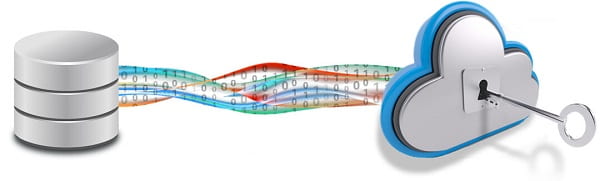
Rising popularity of object storage has encouraged experts to compare its advantages over scale-out storage option. In fact, both storage options are ideal for managing data workloads. Cloud storage is influencing a paradigm shift in the approach of new age enterprises that are looking for access to instant and infinitely scalable storage solutions.
Scalable And Capable
Management of data blocks is often associated with a hierarchical format that resembles a file system structure in scale-out as well as scale-up storage architectures in legacy systems.
Metadata is nothing but the information to help manage storage workloads including the location, accessibility, and files that are part of blocks. Growth of metadata is directly proportional to the filling up of system. There is also a certain limit to which the metadata can be efficiently managed by the storage system in terms of number of blocks of data.
Data is organized by leveraging a key-value structure by cloud object storage unlike traditional structures that are similar to the structure of file system. The key-value structure forms a straightforward index that consists of keys in the form of object IDs, Every object ID is related with position of value corresponding to a data object. By storing only an ID number, the object storage system obviates creation of metadata to denote location of the block in association with multi tier hierarchy.
Efficiency of organizational structure is thus enhanced to far greater extent in comparison with conventional storage architectures. The organizational structure is also flattened significantly by reducing metadata generation as the accessibility of data is facilitated with far lesser steps to process metadata. The object storage system can also grow considerably.
Read More:- What Benefits Does Cloud Object Storage Have Over Scale-Out Storage?

Reduced Complexity With Higher Cost Efficiency
Availability and business continuity is usually ensured by leveraging RAID to improve resilient storage to deal with component failure events. The conventional storage systems require a large number of extra copies, which is a highly complex and difficult process.
Increased period of rebuild cycles due to enlarged RAID associated system. This will eventually result in multiple component failure. Management of risk profile of an enterprise needs a guaranteed resiliency. This can only be implemented by elimination of longer build period with help of architectures highlighted by cloud object storage.
Relevance Of Cloud Object Storage
Easy and cost efficient deployment of storage that is backed by unlimited scalability is the principal aim of cloud storage. There is hardly any wisdom in overloading platforms for cloud storage with obsolete file storage systems that can have a negative impact on cost efficiency, scalability and overall storage administration.
This underlines the significance of choosing a proper support system of storage to ensure successful implementation of cloud storage in an enterprise setup. Cloud storage infrastructure has an excellent compatibility with object storage. Moreover, object storage can enhance cloud usage with greater economy and unlimited accessibility.
Since object storage architecture facilitates automatic routing by leveraging a single space for flat address, thereby enabling the right storage systems. It also empowers security of storage with relevant security levels. Object storage is thus enabled to deliver greater value.

Improved Data Security
Organizations need not rely, any longer on recovery and backup measures for data protection if object storage is implemented. These traditional methods of data security can be things of the past because object cloud storage is an entirely different storage solution that is in the form of a repository. Object cloud storage allows users to access files at any given time via the medium of internet.
Another advantage of an object cloud storage implementation is elimination of hot spots in relation with growth of the cluster. With addition of every node, there is a linear capacity expansion leading to an infinitely scalable storage allowing incremental capacity in terms of input and output.
Being absolutely symmetrical, the cluster becomes an automatically load-balanced entity. This benefit is available across the whole gamut of nodes and therefore there is a significant reduction in number of hot spots as well.
Accessible And Affordable
Enterprises can access storage without any restriction of location and time with help of cloud object storage solution. This accessibility can be experienced on any internet enabled device through a primary protocol of HTTP. This leads to a highly feasible alternative from the provider’s point of view as integration of cloud service packages and object storage solutions is simplified to a great extent.
Users can experience advantages of an extremely affordable storage resource by adopting cloud object storage. Moreover, object storage improves simplicity by allowing organizations to abandon outdated storage infrastructure that is highly constrained and complex.
Read More:- Why Raid Is Becoming An Alternative To Object Storage?
In Conclusion
As workloads become more and more challenging and demanding, the time is ripe for abandoning NAS systems as these cannot be relied upon to meet such challenges. One should also try to deal with latency issues that could arise because of object storage adoption that requires erasure coding for elimination of data system errors.
Although, scale out storage as well as object storage are equally beneficial alternatives from the management’s viewpoint, object storage has been showing better acceptability due to some of the advantages that are discussed earlier. Cloud object storage is therefore fast emerging as an effective and more affordable alternative to conventional storage resources.
Interesting Topics To Read:-
How Object Storage is Different from File and Block Storage?


